
The WordPress and WP Engine dispute showed how a site's supply chain affects updates and security. Questions agencies should ask of any stack.
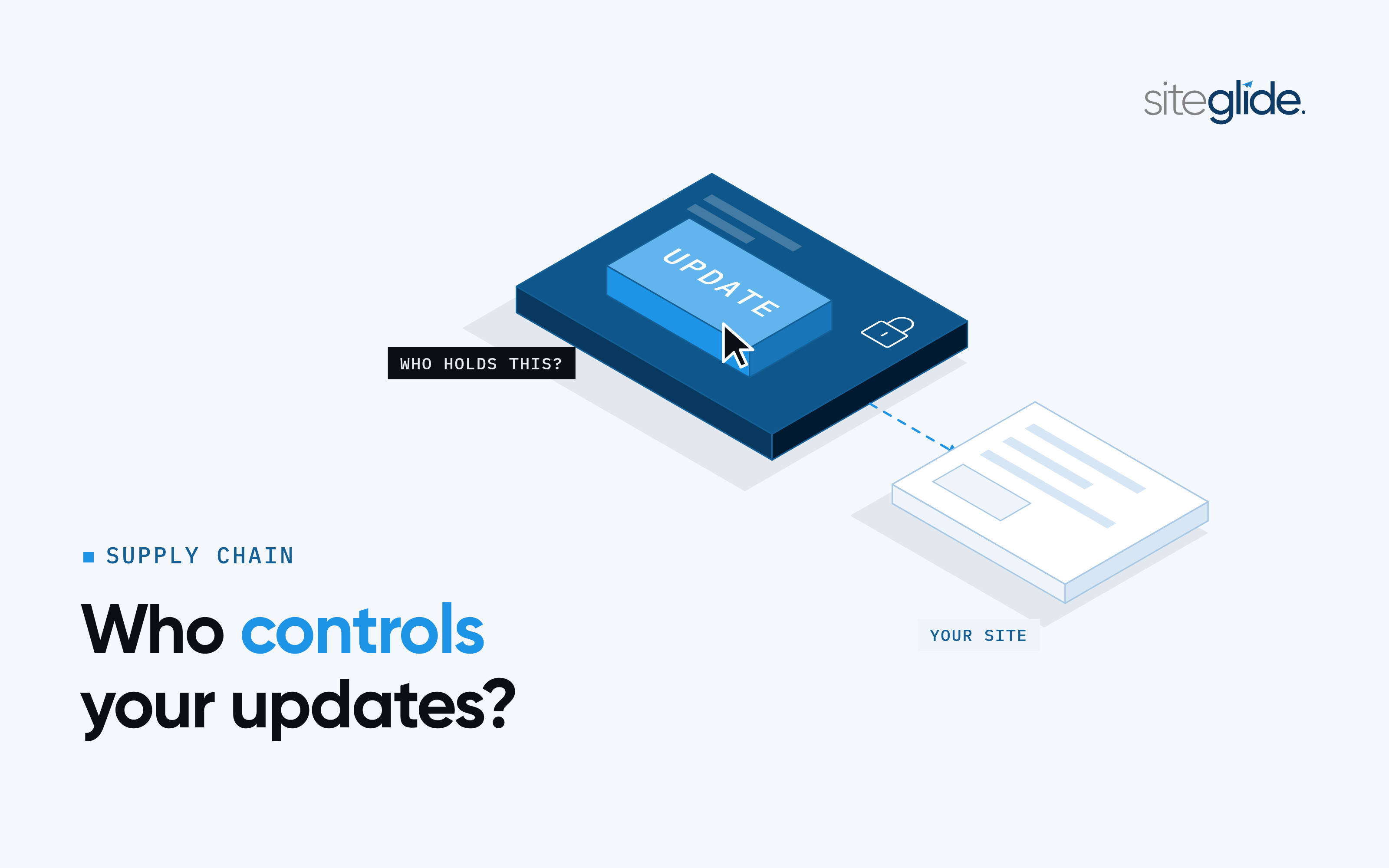
For agencies building on WordPress, the last few months of 2024 were uncomfortable. On 25 September, WordPress.org blocked WP Engine, one of the best-known WordPress hosts, from its resources, which disrupted plugin and theme updates for sites on WP Engine. On 12 October, WordPress.org took over the directory listing for Advanced Custom Fields, a popular plugin owned by WP Engine, and replaced it with a fork called Secure Custom Fields. In December, a US federal court granted WP Engine a preliminary injunction (an interim order, not a final ruling) requiring its access to be restored, and the court ordered WP Engine's control of the plugin listing restored too. The legal case is still going.
We're not going to take sides in the dispute. There are strong opinions on both sides and plenty of commentary already. What interests us is what it showed agencies about their own clients' sites, because the lesson applies well beyond WordPress.
A modern website isn't one product. It's a stack: the core software, a theme, a set of plugins or modules, a host, and the update channels that connect them. Each part can be owned and governed by a different organisation.
Most of the time that's invisible. Updates arrive, things work, nobody thinks about where they came from. Then two organisations in the chain fall out, and agencies discover that whether their clients' sites get updates depends on a relationship they had no part in.
None of the agencies affected did anything wrong. They chose a popular platform, a reputable host and a widely used plugin. That's the uncomfortable part: following common practice didn't protect them.
It's easy to treat this as a story about business politics. For agencies, it's mostly a story about security.
Plugin and core updates are how vulnerabilities get fixed. If the channel those updates arrive through is interrupted, or a plugin's ownership or maintainer changes, sites can fall behind on patches or start receiving code the team hasn't yet reviewed. For a client site that handles personal data or takes payments, that's a real risk, and the client will expect their agency to have thought about it.
Whatever platform you build on, a few questions are worth answering for each client site:
Write the answers down. It takes an afternoon per platform, and it makes conversations with clients far more confident.
When agencies choose a platform for a client, the conversation is usually about features, design flexibility and cost. Governance rarely comes up. It should.
There's no single right answer. Open-source ecosystems give enormous choice and community support. Fully closed SaaS platforms give simplicity but often limit what you can build and take away your exit route. Both involve trade-offs, and agencies should make them knowingly.
This is a question we've thought about a lot, partly because of our own history with Business Catalyst. Siteglide's approach is to have one accountable party for the platform layer, with hosting, security and core updates managed centrally, while agencies keep direct access to their own code and data. If you ever need to move, your work is yours to take.
Whatever you choose, the point is the same: know who controls each part of your clients' sites, and make sure that choice was deliberate.
Some clients will have seen the headlines and be wondering whether their site is affected. A short, calm note helps: what platform their site is on, what the recent events mean for them (often very little), and what you're doing to keep it updated and secure.
Clients don't expect agencies to predict every dispute. They do expect them to understand what their sites depend on, and to have a plan when one of those things changes.
 Website Security
The PHP2Shell flaws (CVE-2026-109618 and CVE-2026-109619) hit PHP sites hard. Siteglide is built without PHP, so it isn't affected.
Read article → Industry
Part 3 of our AI series: AI capability is doubling fast. How to future-proof your agency by building for the trajectory, not the tools.
Read article →IndustryPart 2 of our AI series: AI will split agencies into those who just work faster and those who build IP. Why only one has a future.
Read article →Every plan includes every feature. Build, test and hand over on staging, then add a domain when the client is ready.